As a medical student, choosing a research topic can be both challenging and exciting. With so many interesting and important areas of research in the medical field, it can be difficult to know where to start. In this post, we’ll explore six exciting research topics that are sure to inspire and engage you.
Precision Medicine: Precision medicine is an emerging approach that tailors medical treatment to an individual’s unique genetic makeup. Research in this field could explore the development of personalized therapies and diagnostics. In this section, we’ll explore the potential of precision medicine, recent breakthroughs in the field, and opportunities for future research.
Cancer Research: Cancer research includes the study of cancer prevention, diagnosis, and treatment. Research topics could range from identifying the genetic basis of cancer to developing more effective cancer treatments. In this section, we’ll explore the latest advances in cancer research, current challenges in the field, and promising directions for future research.
Infectious Diseases: Infectious diseases include the study of viruses, bacteria, and other pathogens that cause diseases. Research topics could include the development of vaccines, understanding the mechanisms of infection, and identifying new treatments for infectious diseases. In this section, we’ll explore some of the most pressing infectious disease challenges, recent breakthroughs in the field, and potential areas for future research.
Neuroscience: Neuroscience includes the study of the brain and nervous system. Research topics could range from understanding the mechanisms of neurodegenerative diseases like Alzheimer’s, to developing new therapies for neurological disorders like epilepsy. In this section, we’ll explore some of the most exciting and promising areas of neuroscience research, recent advances in the field, and opportunities for future research.
Public Health: Public health includes the study of the health of populations and communities. Research topics could range from the development of health policies to the study of environmental factors that affect public health. In this section, we’ll explore some of the most pressing public health challenges, recent research findings, and promising directions for future research.
Cardiovascular Diseases: Cardiovascular diseases include the study of the heart and circulatory system. Research topics could include understanding the causes of heart disease, developing new treatments for heart disease, and exploring the effects of lifestyle factors on cardiovascular health. In this section, we’ll explore the latest breakthroughs in cardiovascular research, current challenges in the field, and potential areas for future research.
Conclusion: Research in the medical field is both challenging and exciting, with many opportunities for discovery and innovation. Whether you’re interested in precision medicine, cancer research, infectious diseases, neuroscience, public health, or cardiovascular diseases, there are plenty of exciting research topics to explore. We hope this post has inspired you to pursue your research interests and make meaningful contributions to the field of medicine.
The below 13 AI enabled Apps are amazing for all education purpose and professional workers. Must read and watch video in the end of post.
Reading Apps:
jenni.ai
aI Writing Assistant
Natural Language Processing (NLP) Customizable Templates Multichannel Support Analytics and Insights Integration Security User Support
Jenni.ai is a conversational AI platform that allows businesses to build and deploy chatbots and voice assistants.
Paperpal
Academic Writing Assistant (MS-Word)
Plagiarism checker Grammar checker Citation generator Writing prompts Writing feedback Personalized writing assistance Easy-to-use interface Secure and confidential Fast and reliable Mobile-friendly
PaperPal is an AI-powered writing assistant that helps users improve their writing skills and enhances the readability of their content.
Writing Apps:
scholarcy
Reading Assistant paper summary
AI-powered summarization Reference extraction Related research discovery Document reader Bibliography management Collaboration tools PDF annotation
Scholarcy is an AI-powered research tool that helps researchers, students, and academics read, understand and synthesize complex research articles.
Chatpdf
Chat to any PDF
Read you whole PDF Grab any data from pdf Show the answer with Page No Ask any question from uploaded PDF
ChatPDF is a collaborative PDF editor that allows users to edit, comment and annotate PDF files in real-time with others.
Casper extension
AI with Casper’s Chrome Extension
Automated LinkedIn outreach Personalized messaging Lead generation Automated profile viewing Lead tagging Detailed analytics and reporting Integration with CRM software
Casper-ai is a Chrome extension that uses AI to summarize web pages and highlight key information for easy reading.
SciSpace
Your AI research assistant
Automated typesetting Integration with leading platforms Citation management Collaboration tools Journal templates Grammar and spell-check LaTeX support Export options Customer support
SciSpace is an AI-powered platform for scientific collaboration and knowledge discovery.
For Taking Notes:
Lateral
Complete hours of reading in minutes
Text similarity Text classification Named entity recognition Sentiment analysis Topic modeling Text summarization Document clustering API integration Customizable models
Lateral.io is an AI-powered recommendation engine that helps businesses improve user engagement and personalization.
cliovis
connect Cite Collaborate Categorize Present
Interactive timelines Collaboration tools Customizable design Multimedia support Data import Data visualization Export options Embeddable User support
ClioVis is an AI-powered visualization and collaboration tool for data analysis and presentation.
GLASP is an AI-powered tool for predictive analytics and financial modeling for businesses.
audiopen
convert messy thoughts into clear text
Automatic transcription Speaker diarization Natural language processing Real-time streaming Customization Integration Translation Editable transcriptions API access
AudioPen is an AI-powered platform for generating high-quality transcripts and captions for audio and video files.
Search Engines:
consensus
Evidence-Based Answers, Faster
Customizable decision types Multi-channel voting Anonymous voting Real-time results Customizable reports Integrations Security User support
Consensus is an AI-powered tool for facilitating group decision-making and collaboration, helping teams to reach consensus more effectively and efficiently.
evidence hunt
clinical evidence in a quick and effective way
Powerful search engine Bookmarking and organization Collaboration Analytics and metrics Alerts and notifications Personalized recommendations Integrations
EvidenceHunt is an AI-powered platform that enables researchers and scientists to quickly and easily find relevant scientific articles and research papers.
Search smart
Compare 93 academic databases and their search systems
Advanced search algorithms Natural language processing Personalization Mobile optimization User privacy
SearchSmart is an AI-powered platform that helps businesses and individuals find the most relevant and accurate information on the web more quickly and easily.
How to Apply Study Visa Australia Full Guide with Immegration Steps to submit final case:
Follow the Steps below for All the Guidance.
ChatGPT: Ask any question from chatGPT as your supervisor or Visa Agent
Steps on Official Australian Immegration website to know how to apply and which document needed for it.
How to Apply for Your Student Visa
The Student visa (subclass 500) allows you to live, work and study in Australia for up to five years. You can work up to 40 hours per fortnight during term time and unlimited hours during study breaks. Due to the pandemic, the Australian Government has temporarily lifted the 40-hour limit, and students can start working upon their arrival in Australia.
Visa Fees
The student Visa fee for Visa application case is equal to AUD$650 per visa application for the first time.
Student Visa Requirements
1. Letter of Offer
First letter after applying the course known as Conditional letter that issued you when you’re eligible for course and once you get conditional offer letter, you read terms and conditions and need to pay course fee. Keep save all the reciepts and sign the letter and send the payment proof to University for get full offer letter.
2. Confirmation of Enrolment (CoE)
You accepted offer letter and payments are made, now you have been issued a full offer letter that will attach with your further Visa file. Keep all records copies printed in your Visa file including Fee paid from bank and Bank statement plus your all slips.
3. Proof of English Proficiency
If you have a English Certificate IELTS, Duolingo, TOEFL, or any university required cert, please attach that in your documents as well, in case if you do not have IELTS passed to get your admission follow the video below for any university to get your admission without IELTS.
4. Genuine Temporary Entrant (GTE) Requirement
In simple words it is known as Statement of purpose or Personal Statement for your Visa application where you explain your goal and what will you do after passing the course. You can check the link below to know how to write Personal statement or Statement of Purpose.
Provide Bank statement of your father, to show that you have enough fund to support you in Australia. Show your all Proof of amount inlcuding Fee paid from Bank, and all the amount should spent from one account and attach 6 months statement that show your good wealth to support.
If you’re applying a fully funded scholarship program you do not need any bank statement.
6. Family Relation Tree
Family Relation Tree FRC can requested from Nadra Office to show your family realtionship and proof that your father , brother or sister finance you is your blood relation. You may need Birth Certificate for your Brother Sister in case if available can attach as plus point.
7. Overseas Student Health Cover (OSHC)
You need a Student health Insurance certificate from your local country where it is easy and search at google that will show many online platforms provide you Medical Certificate in less amount. I can refer easyinsurance below button to apply chepaer and better in Pakistan.
Go to nearest government medical center and ask for Travel Health certificate. They will guide further which test is necessary for travel health certificate and issue you a signed stamped certificate.
tuberculosis
HIV
hepatitis B or C
Hansen’s disease
9. Character Requirement
Go to your nearest Police station office and ask them, how can i apply my police clearance certificate and provide your details including CNIC Passport. They will issue you a certiciate in 1 day only without any charge.
10. Passport Size Photographs
You need Three passport size photographs with white background. Keep in pocket as optional.
11. Accommodation Letter
You need an accommodation letter from Australia, either from your friend or from your landlord where you staying or it can be your University hostel where you already paid amount for 1 or 2 months for your arrival host room. If your relatives or friend living in Australia can provide you a letter with all his details and full address and postal code to satisfy visa officer that you will stay here.
Never mention your friends house or relative house. Always use word landlord in your application where you staying and person allow you to stay in home.
ImmiAccount helps you to create online immigration account for your visa application. The Below button bring you to sign up for ImmiAccount. All required documents are listed and need to check.
It is available in the Immiaccount online check button that you must apply for it. Otherwise you will have to print and sign the Values statement document for your application that indicates that you’re in respect the culture and values of Australia upon your arrival.
In last, Write a brief summary to your Visa officer as it is also stated in the same website where you state about your education and current siutation for higher studies, must add a paragraph who is financing you and return to home country after course completion. Keep the title as Visa Application.
Print your online created ImmiAccount application as a pdf and sign and attach with your final visa file.
All documents in one file including signed passport and its copies from first 3 pages and last 3 pages should be in file. All the education original documents attached along with printed application that you process from immegration website.
Please Make 3 Set of final document file and keep 1 in your own custody.
After You Apply.
Status updates
Biometrics : Letter and Immiaccount ( 14 days)
Health exams
Mistakes on your application
You need further your all documents put in one file and start applying online from the immegration website that i will further provide below button to more clear your each step.
After you reach Australia: Within 28 days you need to again contact health check from website BUPA.com for an appointment. If officer asked you to undertake this examination in case of significant health conditions.
When Preparing for Travel: Everything contact on your email and Immiaccount. When you travel you should keep passport, educational documents, Bank statement, House address to stay and course enrollment letter. Smile and reply all questions. Stay happy with your firs fly !
If you require any information please comment below.
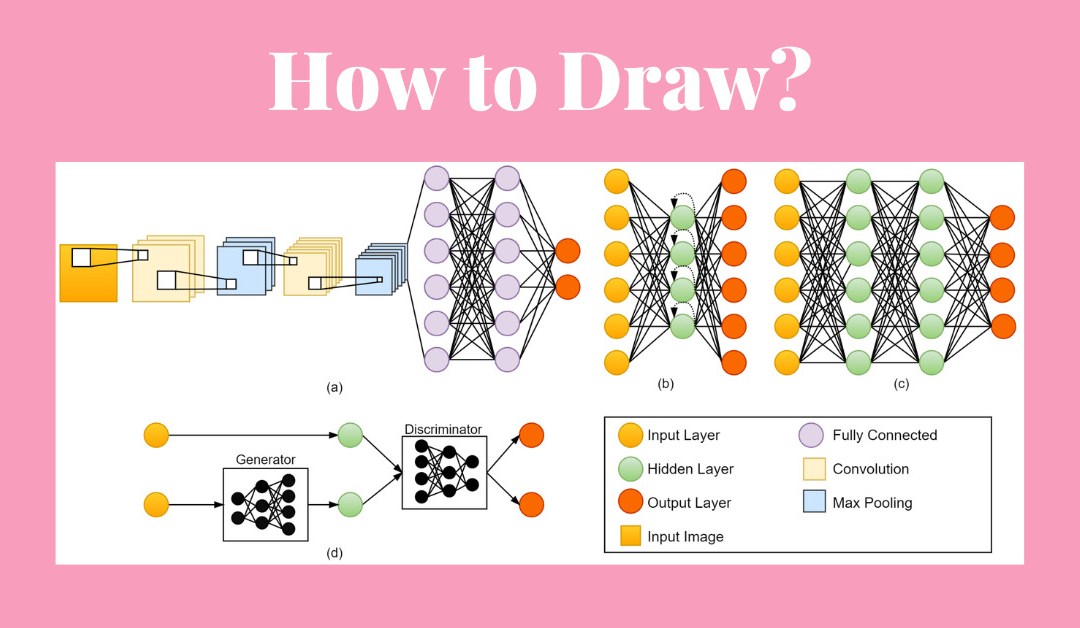
How to draw Neural Network Figures using online tools.
There are many tools that can help you build figures, hwoever some interesting tools are here to help you build more better images in less time.
Please find the tools below:
The tool NN SVG allows users to input a neural network’s architecture (i.e., the number of layers, the number of neurons in each layer, and the connections between them) and then generates a visual representation of the network. The visualization consists of interconnected nodes (representing neurons) and arrows (representing the connections between them).
The color of the nodes can also be used to represent different types of neurons, such as input, hidden, or output neurons. The tool also allows users to adjust the size and spacing of the nodes, as well as the thickness of the arrows, making it easier to visualize and understand the network.
Overall, the tool is useful for researchers and practitioners in the field of machine learning who want to better understand how neural networks operate and how changes to their architecture can affect their performance.
Plot Neural Net link that provides high defination figure, which is a tool for visualizing neural networks using LaTeX.
The package provides a simple syntax for defining the architecture of a neural network using a set of customizable commands. The output is a high-quality vector graphic that can be easily integrated into academic papers or presentations. An example of the image provides below.
The package supports a range of different types of layers, including convolutional layers, fully connected layers, pooling layers, and activation functions. The user can also specify the size and spacing of the layers and adjust the color and style of the arrows connecting them.
Introduction Blog for Segment Anything Model Working in YouTube
The Segment Anything Model (SAM) is a cutting-edge neural network-based approach that can be used to segment and label objects in images or videos. This model is trained on a large dataset of annotated images, where each pixel is manually labeled with the corresponding object category. The SAM model is capable of performing a wide range of tasks such as object detection, semantic segmentation, instance segmentation, and image/video editing.
The SAM architecture is a fully convolutional network that takes an image or video frame as input and generates a segmentation map, where each pixel is assigned a label indicating the object it belongs to. The model consists of an encoder-decoder network with skip connections, allowing it to capture both low-level and high-level features of the input image. The encoder network consists of several convolutional layers followed by max pooling, which progressively reduces the spatial resolution of the input image. The decoder network consists of several convolutional layers followed by upsampling, which increases the spatial resolution of the feature maps generated by the encoder.
The skip connections in the SAM model are used to connect corresponding feature maps from the encoder and decoder networks, which helps to preserve spatial information during the downsampling and upsampling operations. During training, the SAM model minimizes a loss function that measures the difference between the predicted segmentation map and the ground truth segmentation map. The loss function can be defined in various ways depending on the task at hand, such as cross-entropy loss, binary cross-entropy loss, or mean squared error.
Once the SAM model is trained, it can be used to segment objects in new images or videos. The input image or video frame is fed into the SAM model, and the model generates a segmentation map indicating the object labels for each pixel. This segmentation map can then be used for various applications such as object detection, semantic segmentation, instance segmentation, or image/video editing.
The Segment Anything Model has many potential applications in computer vision and image/video processing. Object detection is one of the most common tasks that can be performed using SAM. This task involves detecting and localizing objects in images or videos. Semantic segmentation, on the other hand, involves assigning a label to each pixel in an image or video. This can be useful for tasks such as image or video editing, where it is necessary to separate the foreground and background of an image or video. Instance segmentation is another task that can be performed using SAM. This task involves identifying and distinguishing between multiple instances of the same object in an image or video.
In conclusion, the Segment Anything Model is a powerful tool for segmenting and labeling objects in images or videos. Its ability to perform a wide range of tasks makes it a versatile model that can be used for many applications. The model’s architecture and training process make it capable of producing accurate and reliable results, making it an essential tool for anyone working in computer vision or image/video processing.
How did you find this please share your thoughts in comment below.